

acp-mcp
The ACP to MCP Adapter is a lightweight standalone server that acts as a bridge between two AI ecosystems: Agent Communication Protocol (ACP) for agent-to-agent communication and Model Context Protocol (MCP) for connecting AI models to external tools.
ACP to MCP Adapter
Connect ACP Agents to MCP Applications Seamlessly




The ACP to MCP Adapter is a lightweight standalone server that acts as a bridge between two AI ecosystems: Agent Communication Protocol (ACP) for agent-to-agent communication and Model Context Protocol (MCP) for connecting AI models to external tools. It allows MCP applications (like Claude Desktop) to discover and interact with ACP agents as resources.
Capabilities & Tradeoffs
This adapter enables interoperability between ACP and MCP with specific benefits and tradeoffs:
Benefits
- Makes ACP agents discoverable as MCP resources
- Exposes ACP agent runs as MCP tools
- Bridges two ecosystems with minimal configuration
Current Limitations
- ACP agents become MCP tools instead of conversational peers
- No streaming of incremental updates
- No shared memory across servers
- Basic content translation between formats without support for complex data structures
This adapter is best for situations where you need ACP agents in MCP environments and accept these compromises.
Requirements
- Python 3.11 or higher
- Installed Python packages:
acp-sdk,mcp - An ACP server running (Tip: Follow the ACP quickstart to start one easily)
- An MCP client application (We use Claude Desktop in the quickstart)
Quickstart
1. Run the Adapter
Start the adapter and connect it to your ACP server:
uvx acp-mcp http://localhost:8000
[!NOTE] Replace
http://localhost:8000with your ACP server URL if different.
Prefer Docker?
docker run -i --rm ghcr.io/i-am-bee/acp-mcp http://host.docker.internal:8000
Tip: host.docker.internal allows Docker containers to reach services running on the host (adjust if needed for your setup).
2. Connect via Claude Desktop
To connect via Claude Desktop, follow these steps:
- Open the Claude menu on your computer and navigate to Settings (note: this is separate from the in-app Claude account settings).
- Navigate to Developer > Edit Config
- The config file will be created here:
- macOS:
~/Library/Application Support/Claude/claude_desktop_config.json - Windows:
%APPDATA%\\Claude\\claude_desktop_config.json
- Edit the file with the following:
{
  "mcpServers": {
    "acp-local": {
      "command": "uvx",
      "args": ["acp-mcp", "http://localhost:8000"]
    }
  }
}
Prefer Docker?
{
  "mcpServers": {
    "acp-docker": {
      "command": "docker",
      "args": [
        "run",
        "-i",
        "--rm",
        "ghcr.io/i-am-bee/acp-mcp",
        "http://host.docker.internal:8000"
      ]
    }
  }
}
3. Restart Claude Desktop and Invoke Your ACP Agent
After restarting, invoke your ACP agent with:
use "echo" agent with the "Good morning!" input
Accept the integration and observe the agent running.
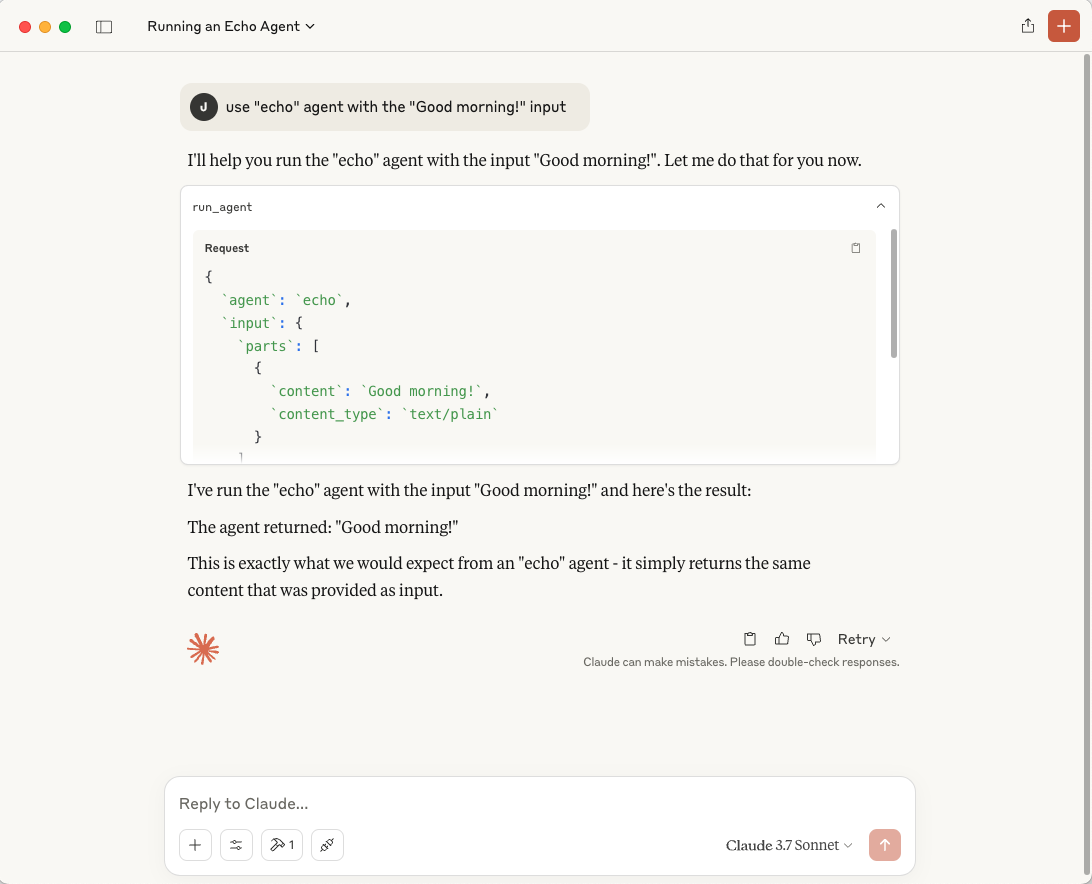
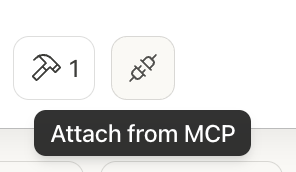
[!TIP] ACP agents are also registered as MCP resources in Claude Desktop.
To attach them manually, click the Resources icon (two plugs connecting) in the sidebar, labeled "Attach from MCP", then select an agent likeacp://agents/echo.
How It Works
- The adapter connects to your ACP server.
- It automatically discovers all registered ACP agents.
- Each ACP agent is registered in MCP as a resource using the URI:
acp://agents/{agent_name} - The adapter provides a new MCP tool called
run_agent, letting MCP apps easily invoke ACP agents.
Supported Transports
- Currently supports Stdio transport
Developed by contributors to the BeeAI project, this initiative is part of the Linux Foundation AI & Data program. Its development follows open, collaborative, and community-driven practices.


Recommend MCP Servers 💡

@aixbt/mcp-server
A MCP server integrating AIXBT data API to provide context services.


@burtthecoder/mcp-virustotal
A Model Context Protocol (MCP) server for querying the VirusTotal API. Provides comprehensive security analysis tools with automatic relationship data fetching. Integrates seamlessly with MCP-compatible applications like Claude Desktop.

bing-search-mcp
MCP Server for Bing Search API

glean-mcp-server
An MCP server implementation integrating Glean API for Search and Chat functions.

hass-mcp
A Model Context Protocol (MCP) server for Home Assistant integration with Claude and other LLMs, enabling AI assistants to query, control, and summarize smart home entities.

@ahmetbarut/jira-mcp-server
A modular, extensible Model Context Protocol (MCP) server for interacting with Jira Cloud, enabling integration with AI agents, bots, or automation systems.